
You Finished Your Race. When Should You Run Again?


When to Start Running Again After a Big Race:
A Week-by-Week Guide
You crossed the finish line!!!
CONGRATULATIONS!!1
You earned the medal!!!!
And now getting down the stairs might feel harder than getting to the starting line. 😂
Or maybe your legs already feel surprisingly good, and you’re wondering if you should head out for a run.
Whether you finished the St. George half, full marathon, or another big race, the next step is recovery.
Before you chase another goal—or try to make up for a race that didn’t go as planned—give yourself time to recover from this one.
Here’s how to decide when to run again and how to ease back in without rushing the process.

Here’s a week-by-week guide to help you transition back to running after your marathon, ensuring a full recovery and a smooth return to training.
** For those who ran St George ..... Why are your quads complaining?
Running downhill asks your muscles to act like brakes with every step. That repeated loading can leave your legs sore and temporarily less able to produce force.
Feeling less sore is encouraging, but it isn’t your only sign of recovery. Pay attention to how you walk, handle stairs, sleep, and feel throughout the day, too.***

Week 1: Rest and Active Recovery
Focus: Complete recovery and gentle movement
Why: Your body has endured a grueling effort, with muscles, tendons, and ligaments all needing time to repair. Jumping back into running too soon can lead to overuse injuries.
What to Do: Take at least 5-7 days off from running. Use this time for active recovery, including walking, gentle cycling, or swimming. Light stretching or yoga can help ease muscle soreness, but avoid anything too strenuous.
Tip: Listen to your body—if you're still feeling fatigued or sore after a few days, extend your rest period. Massage and foam rolling can also assist in reducing soreness.

Week 2: Light Activity and Short Runs
Focus: Slow reintroduction of running
Why: Although your muscles may feel better, the risk of overuse injuries is still high. Easing into running allows your body to readjust to the movement without overwhelming it.
What to Do: Begin with 2-3 very easy runs, no more than 2-3 miles per session. This is also a great time to continue cross-training to maintain fitness without overloading your body. Activities like swimming or elliptical workouts can help.
Tip: Keep the intensity low, and don’t worry about pace—this is about shaking out the legs and gently getting back into your routine.

Week 3: Gradual Mileage Build
Focus: Increasing frequency and distance slowly
Why: Now that your body is beginning to adapt again, you can safely start to increase your mileage. However, it's important to avoid the temptation to jump back into full training.
What to Do: Gradually increase the duration of your runs. For post-marathon: Aim for 3-4 runs this week, with the longest being no more than 4-6 miles. Keep the intensity low, and avoid any speed work or hills. For other distances: follow the image at top of post.
Tip: Build from what your body is comfortably tolerating. Increase one thing at a time—run duration, frequency, or intensity—and check how you feel during the run, afterward, and the next morning. Repeat or reduce your running if soreness or fatigue increases.

Week 4: Reintroducing Intensity
Focus: Adding gentle speed work
Why: Your body should now be ready for a bit more intensity, but it’s still important to be cautious. Adding too much too soon can lead to injury.
What to Do: Begin incorporating gentle fartlek runs or short intervals into your routine. Keep your overall mileage at 60-70% of your peak marathon training, and focus on effort rather than pace.
Tip: If you’re feeling strong, you can increase one of your runs to 6-8 miles, but make sure you're giving your body time to adapt.
Ran the half? You may be ready sooner than someone who raced the full, but “only a half” still deserves recovery—especially after a hard effort.
Before your first easy run, look for:
Comfortable walking and stairs without limping or compensating.
Muscle soreness that has substantially settled.
Energy and sleep returning toward normal.
No sharp, localized, or worsening pain.
Stop if pain builds or changes your stride. Pain in one specific spot, pain at rest or at night, or symptoms that aren’t improving deserve an evaluation rather than another test run.

Week 5-6: Return to Normal Training
Focus: Returning to pre-race mileage
Why: After about a month of gradual rebuilding, your body should be ready for a return to regular training, assuming you’ve had no setbacks or lingering soreness.
What to Do: Gradually return to your normal training volume and intensity. You can now incorporate longer runs (8-10 miles) and tempo sessions, but continue to monitor how your body responds. If you feel any unusual soreness or fatigue, scale back as needed.
Tip: This is a great time to set new goals, whether it’s a shorter race or planning your next marathon.

Additional Recovery Tips:
Keep fueling: fewer miles still means your body needs food. Include carbohydrates and protein in regular meals and snacks.
Sleep: Rest is key to recovery. Make sure you’re getting quality sleep to support muscle repair and overall recovery.
Injury Prevention: If you notice any nagging pains or issues, consider seeing a physical therapist or incorporating regular strength training to address muscle imbalances and prevent injuries.
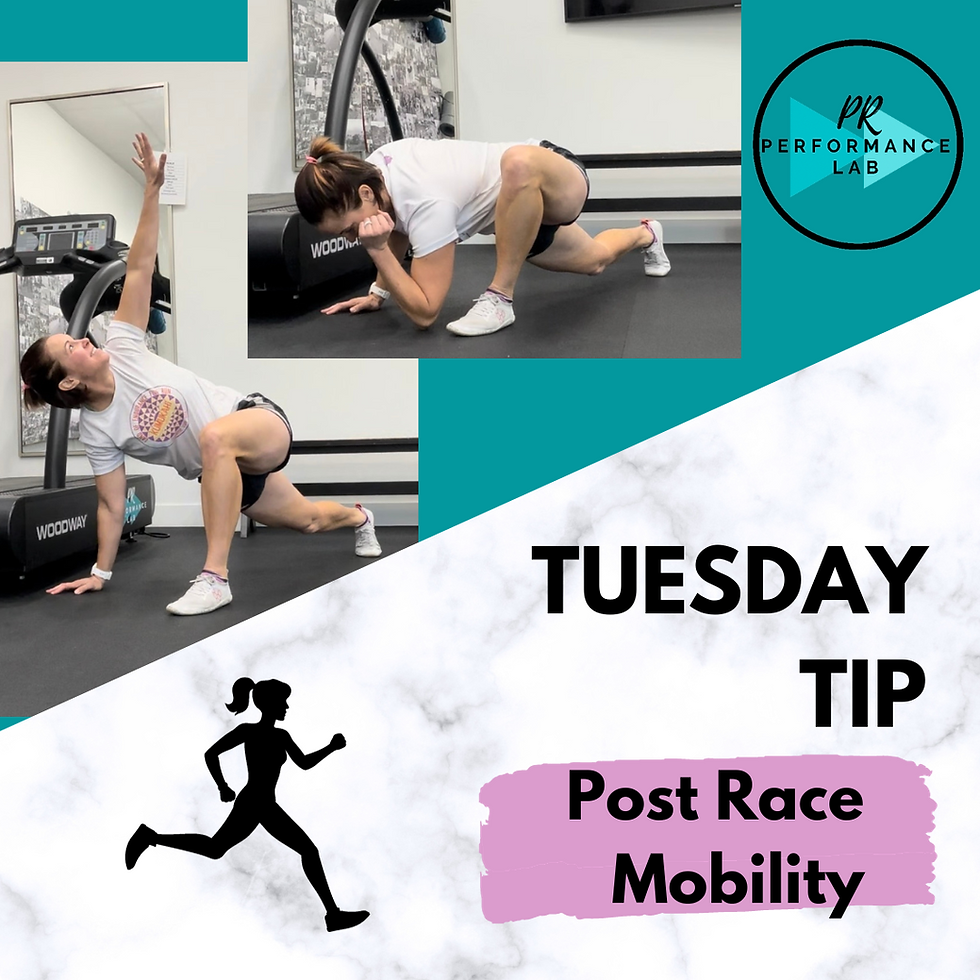
Keep recovery gentle: mobility, rolling, and massage should feel comfortable; avoid forcing sore muscles through painful stretching.
Allow a mental break: runners don’t need to choose their next race immediately.
Conclusion: Be Patient with Your Recovery
Post-race/marathon recovery is all about patience and listening to your body. By following a structured, gradual return to running, you’ll not only recover fully but also prevent injury and come back stronger. Remember that recovery is an essential part of any training cycle, so give your body the time it needs to heal before jumping back into full training.
By easing back into your routine with a thoughtful, week-by-week approach, you’ll be ready to tackle your next running goal in no time!
Happy Running!
- Dayna
Feel free to share this post with your fellow runners and spread the good word about post-race recovery!
Got questions? Comment below or shoot me a message.
I'm always here to help you run more efficiently and injury-free.
If you need help with your running, our Running Assessment has all the tools for you! Muscle imbalance testing, form help for injury prevention and performance goals, and 8-weeks of personalized strength exercises.

Want more help?
Join our Running Workshop here!
Or
Learn how you can run more efficiently Running Assessment
Or
Get your FREE Strength Assessment here!
Or
Join our online 12-week strength program here!

Comments