
Marathon in 7 Weeks: What Matters Most From Now Until Race Day
- Dayna Player Robinson

- 2 days ago
- 6 min read

Marathon in 7 weeks?!? What Matters Most From Now Until Race Day
That sounds like a lot of time… and also not very much time at all.
At this point in marathon training, runners tend to fall into one of two camps:
You’re feeling good and wondering if you should squeeze in just a little more training.
OR…
You’ve missed a few workouts, your long run didn’t go perfectly, and you’re wondering if you need to start making up miles.
Here’s what I want you to know:

The next seven weeks aren’t about cramming in as much training as possible. They’re about putting the finishing touches on the fitness you’ve already been building — while getting yourself to the start line healthy, fueled, confident, and ready to race.
Here’s what should matter most.
Weeks 7–5: Build + Get Specific
You are still in a productive training window.
There’s time to continue building your long run, improve your endurance, and put in some really valuable marathon-specific work.
But this is also when training should start looking more and more like what you’ll actually be doing on race day.
Keep building the long run
Your long run is still one of the most important workouts of the week.
That doesn’t mean every long run needs to be faster, longer, or harder than the one before it.
The goal is to continue building the ability to stay on your feet, manage fatigue, fuel while running, and maintain good movement as your legs get tired.
Keep MOST of your running easy
More intensity is not automatically better training.
For most marathoners, the majority of weekly mileage should still feel comfortable. Think roughly 80% easy running with about 20% of your training being more purposeful or challenging.
Your easy miles allow you to absorb the harder work.
If every run starts becoming a medium-hard effort because race day is getting closer, you’re much more likely to arrive at your important workouts tired.
One quality workout goes a long way
This might include:
Marathon-pace running
Tempo or threshold work
Hills
Progression runs
Marathon-effort sections during a longer run
You don’t need to prove your fitness every Tuesday.
The workout should have a purpose — not just leave you exhausted.
Practice your fueling NOW
Please do not wait until race day to find out whether your stomach likes the gel you bought at the expo.
Long runs are rehearsals.
Use them to practice:
Your pre-run breakfast
How many carbohydrates you’ll take each hour
When you’ll start fueling
Your fluids
Your sodium/electrolytes
How you’ll carry everything
Your digestive system can be trained too.
Race-day fueling should eventually feel boring because you’ve practiced it so many times.
Keep strength training
You don’t need to abandon strength because the marathon is getting close.
You do, however, need to be smart about it.
Keep doing the strength work that has helped you stay durable, but this is probably not the time to introduce a brand-new workout that leaves you unable to sit on the toilet for three days.
Strength should support your running — not compete with it.
Weeks 4–3: Peak Training
This is where we usually see some of the biggest marathon-specific training sessions.
Depending on the athlete and training plan, this may include your longest run or your biggest marathon-effort workout.
The key word here is specificity.
You’re not simply trying to become more fit.
You’re trying to become more prepared for your marathon.
Practice marathon effort
Some of your longer runs may include portions at goal marathon pace or effort.
This is where you learn what race pace actually feels like when your legs aren’t fresh.
Pay attention to:
Breathing
Heart rate
Perceived effort
Form
Fueling
How well you hold pace late in the workout
Your goal marathon pace should feel controlled — not like you’re racing a half marathon.
Prepare for YOUR course
If your marathon includes significant downhill running, rolling terrain, hills, altitude, heat, or other course-specific challenges, your training should reflect that.
For example, runners preparing for a downhill marathon should have some controlled downhill exposure before race day.
Your cardiovascular system may love downhill running.
Your quads might have a very different opinion around mile 20.
Recovery becomes part of the workout
As your training peaks, your recovery needs to peak too.
Pay attention to:
Sleep
Carbohydrate intake
Hydration
Mobility
Easy days
Overall life stress
Sometimes the smartest marathon workout is going to bed instead of adding another 30-minute run.
Weeks 2–1: Taper
And now comes the part runners love to hate.
The taper.
Suddenly, after months of wanting fewer miles, you start thinking:
"Shouldn’t I be doing more?"
No.
The taper is not when fitness disappears.
The taper is when your body finally gets the opportunity to absorb the fitness you’ve built.
Reduce volume — not all intensity
Mileage comes down, but I still like athletes to keep a little bit of faster running in the plan.
Short marathon-pace sections, strides, or brief controlled intervals can help keep your legs feeling sharp without creating significant fatigue.
Do NOT make up missed training
This one deserves its own paragraph.
If you missed a 20-mile run three weeks ago, you do not need to squeeze it into race week.
Missed training is gone.
Trying to make it up now usually creates more risk than reward.
You cannot cram for a marathon.
Reduce heavy lifting
You don’t necessarily need to stop all strength work immediately, but heavy lifting should start decreasing so your legs can recover.
Think maintenance rather than building.
Your goal is to arrive on race morning feeling like you have energy you're dying to use.
What You Should Know Before Race Week
By the time marathon week arrives, there should be very few unanswered questions.
You should know your:
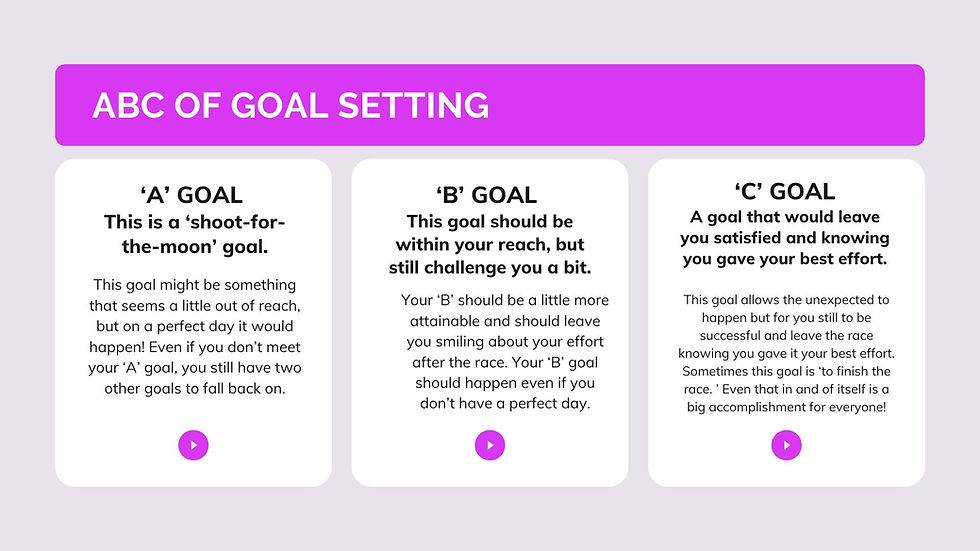
A, B, and C goals
Your marathon doesn't need to have one all-or-nothing outcome.
Maybe:
A Goal: Everything goes perfectly.
B Goal: A strong, realistic performance.
C Goal: Adjust, compete well, and finish strong based on the day you're given.
Weather, stomach issues, course conditions, and simply being human can change race day.
Having multiple goals keeps one difficult mile from turning into a ruined marathon.
Pace and effort strategy
Know how conservative you need to be early.
The first 5–10 miles of a marathon should rarely feel impressive.
If you feel incredible at mile 4?
Good.
Keep holding back.
You’re saving that feeling for later.
Fueling plan
Know exactly:
What you're eating before the race
How many carbs you're targeting each hour
When you'll take your first fuel
How much fluid you need
Your sodium plan
What you're carrying
What you're getting from aid stations
Do not leave these decisions until race morning.
Race-day gear
Shoes.
Socks.
Shorts.
Sports bra or top.
Anti-chafe.
Fuel belt or handheld.
Everything should already have been tested.
Race day is not the day for your cute new outfit.
Your plan for when it gets hard
Because it will.
That doesn't mean something has gone wrong.
It means you're running a marathon.
Decide ahead of time what you'll tell yourself.
Maybe you focus only on getting to the next aid station.
Maybe you check your posture.
Maybe you take in fuel.
Maybe you remind yourself:
This is the part I trained for.
Seven Weeks Out: Consistency Wins
There are still meaningful workouts ahead.
There is still fitness to gain.
But the goal from here to race morning is not to see how much suffering you can fit into seven weeks.
The runners who perform well on marathon day are often the runners who can string together solid training week after week without constantly digging themselves into a hole.
So keep training.
Keep fueling.
Keep lifting.
Keep recovering.
Practice your race-day plan.
And remember:
You still have enough time to gain fitness.
You do NOT have enough time to recover from doing something stupid.
Consistency beats hero workouts every time.

Want help making the next seven weeks count?
If you’re questioning your pacing, fueling, running form, training zones, or whether your current plan actually fits you, this is exactly where individualized coaching and testing can make a difference.
At this point in training, even a 1-hour coaching consult can make a big difference in your race day!
At PR Performance Lab, I help runners take the guesswork out of training so they can get to the start line healthy — and actually use the fitness they've worked so hard to build.
Happy Running!
Dayna, your favorite Exercise Physiologist & Run Coach
Your soreness or injury might also mean it is time for a Running Assessment, which always includes 8 weeks of strength exercises designed to help your individual needs found during the Running Assessment.

Want more help?
Join our Running Workshop here!
Or
Learn how you can run more efficiently Running Assessment
Or
Get your FREE Strength Assessment here!
Or
Join our online 12-week strength program here!


Comments